Anne Sexton: A Poet In Pain
Special to the Newsletter by Michael F. Bishop
“Put your ear down close to the soul and listen hard,” wrote Anne Sexton. Few modern poets had a more troubled soul than she.
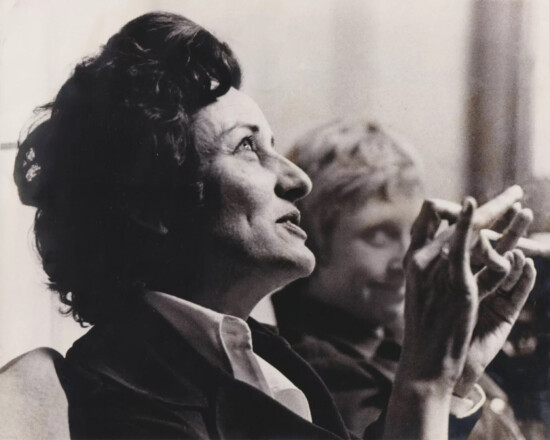
Anne Gray Harvey was born on November 9, 1928, in Newton, Massachusetts. She grew up in a prosperous, but emotionally distant family. Her father was a successful wool merchant; her mother a socially ambitious figure with literary pretensions. Sexton later described a childhood marked by feelings of inadequacy, sibling rivalry, and early experiences of sexual confusion and trauma that were recurring subjects in her work.
She attended boarding and finishing schools, then eloped in 1948 with Alfred “Kayo” Sexton II. The couple had two daughters, Linda and Joyce. Domestic life proved unstable. Sexton struggled with postpartum depression after the births—and—repeated hospitalizations for psychiatric care in the 1950s. In 1956, following a suicide attempt, Sexton’s therapist suggested she try writing poetry as a form of expression.
She enrolled in a poetry workshop led by John Holmes, studied with Robert Lowell at Boston University, and formed a close friendship with Sylvia Plath. Lowell’s confessional mode in Life Studies provided a crucial model. Sadly, Plath would also influence Sexton in the most tragic way imaginable.
Her first collection, To Bedlam and Part Way Back, included poems about mental institutions, maternal ambivalence, and the thin boundary between sanity and breakdown. The title sequence draws directly from her hospitalizations. Critics noted the technical control beneath the emotional extremity. All My Pretty Ones continued in a similar way, addressed the deaths of her parents and the complexities of family loyalty and resentment, while poems such as “The Truth the Dead Know” displayed her gift for combining private grief with formal precision.
Sexton’s breakthrough came with Live or Die, which won the Pulitzer Prize in 1967. The book’s chronological arrangement of poems written between 1962 and 1966 traced the trajectory from despair toward an affirmation of life, culminating in the defiant “Live.” Works like “Wanting to Die” and “Sylvia’s Death” (an elegy for Plath) exemplified her willingness to address taboo subjects: depression, erotic desire, the glamor and terror of self-destruction.
Subsequent books expanded her range. Love Poems explored desire with unusual candor for the period. Transformations reimagined Grimm fairy tales through a feminist, psychoanalytic lens, turning familiar stories into darkly comic and sexually charged narratives; the volume later inspired an opera. The Book of Folly and The Death Notebooks returned to religious and existential questions, including a series of poems that wrestled with faith, guilt, and the body.
She insisted on craft, revising extensively and performing her work with theatrical intensity. Readings became central to her career; she cultivated a public persona that blended glamour, vulnerability, and calculated shock. Themes of female identity, the body, mental illness, and the search for transcendence run throughout. She helped legitimize poetry that spoke openly about women’s interior lives and psychiatric experiences, paving the way for later writers.
Her personal life remained turbulent, and she was often lonely. Her biographer later observed, “She yearned to browse in bookstores and libraries, but couldn’t go unless a friend accompanied her. Grocery stores, drugstores, and department stores terrified her.” Multiple affairs, ongoing psychiatric treatment (including sessions with a therapist who later published controversial material based on their work), alcohol dependence, and repeated suicide attempts marked the years of her greatest productivity. In 1973 she divorced Kayo. On October 4, 1974, at the age of 45, she died by suicide in her garage in Weston, Massachusetts. She had always had a sense of impermanence, writing in one of her love poems, “As for me, I am a watercolor. I wash off.” She was buried in Boston’s Forest Hills Cemetery, near the poet e.e. cummings.
Sexton’s legacy is substantial. She taught at Boston University and elsewhere, and impacted generations of poets who have explored trauma and the line between sanity and madness. Scholars continue to examine her formal innovations, her engagement with fairy tale and religious tradition, and her place within mid-century American poetry alongside Lowell, Plath, and others.
Michael F. Bishop, a writer and historian, is the former executive director of the International Churchill Society and the Abraham Lincoln Bicentennial Commission.