The Princess Bride
by William Goldman
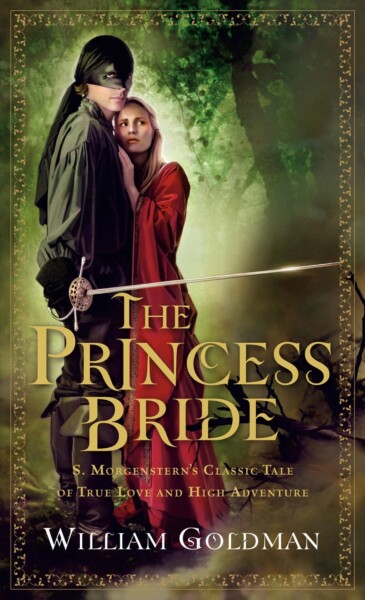
The Princess Bride, by William Goldman.
Originally published 1973.
Reviewed by Ed Lengel
William Goldman was a serious professional writer, who worked across a myriad of genres. Educated at Oberlin College and Columbia University, he taught creative writing and also moved through academic and intellectual circles. He claimed that writers like Anton Chekhov, W. Somerset Maugham, and Leo Tolstoy as his literary influences. Goldman’s literary career included novels, screenplays, and poetry.
Early on, Goldman’s life was tragic; he was orphaned when his father, an alcoholic, committed suicide when Goldman was a teenager. Still, he was a writer of rare perceptivity. In between his more run-of-the-mill productions, he created works of profound and enduring importance. The biggest hurdle to achieving due recognition was the diversity of their genres, subjects, and viewpoints. Niche writers established consistent audiences, from readers to critics and reviewers. Goldman, however, was the opposite; he hopped from place to place, with each work having to seek appreciation from a new audience. Thus, among his better-known novels and screenplays, The Princess Bride (1973) was a fantasy; Marathon Man (1974) was an espionage thriller; Harper (1966) was a detective story; Butch Cassidy and the Sundance Kid (1969) a western; All the President’s Men (1976) a political drama; A Bridge Too Far (1977) a military history, and so on. He also wrote in genres like horror and comedy.
The Princess Bride was, and is, itself incredibly hard to classify. In outline it hearkens to a classic trope of nineteenth and early-twentieth century adventure and fantasy novels. In his introduction, Goldman presents the novel as an abridgement of a rare manuscript by one S. Morgenstern, highlighting the “good parts” of Morgenstern’s work with occasional outside commentaries by Goldman. Much as the movie Raiders of the Lost Ark (1981, not by Goldman) simultaneously and good-humoredly satirized and paid tribute to the great adventure movie serials of the 1930s; The Princess Bride lovingly and farcically hearkens to classic literary romances, fantasies, swashbucklers, and more. There are elements of Robert Louis Stevenson; Cervantes; Rafael Sabatini (author of the Captain Blood novels); J.R.R. Tolkien; Edgar Rice Burroughs; John Buchan; and a hodgepodge litany of others that Goldman expected avid readers to recognize.
The names of the characters, for example, and the central plot elements, are rollickingly farcical. In Renaissance Europe, Princess Buttercup falls in love with her handsome servant Westley, who leaves to seek his fortune so that he can marry her, only to fall victim to the Dread Pirate Roberts, and disappear. He re-emerges as the masked “man in black,” who pursues the mismatched trio of Vizzini, Inigo Montoya, and Fezzik, who have kidnapped Buttercup, and whose rivalries and better natures Westley exploits. Prince Humperdinck, the unwilling Buttercup’s betrothed, also pursues her. The story passes through places like the Cliffs of Insanity and the Fire Swamp, with innumerable adventures, before culminating in a last-second dramatic rescue replete with magic, revealed identities, and of course sword duels.
In equal parts absurd and self-mocking, deeply serious, and simply fun, The Princess Bride is fundamentally unclassifiable. So it was that, upon release, the novel did not sell particularly well. Readers and reviewers didn’t know what to do with it; booksellers struggled to decide where it belonged on their shelves. Goldman, who had already shifted from one genre to another with dizzying speed, and would continue to do so, and his publisher couldn’t market it to any niche audience. In 1973, fantasy literature had just entered its heyday, with Tolkien enjoying a resurgence and novelists like Anne McCaffrey, author of the Dragonriders of Pern series, enjoying vast popularity that would lead to the genre’s literary explosion through the remainder of the century. Notably, though, Goldman and his publisher did not purposely try to position The Princess Bride within this new field.
Not until 1980, when science fiction writer Spider Robinson published an excerpt from The Princess Bride in an anthology of fantasy and science fiction, did Goldman’s work come to the attention of readers who could appreciate it—maybe not for the reasons Goldman originally intended, but to the novel’s benefit all the same. The film adaptation of The Princess Bride (1987), by far the version best remembered today and the vehicle for making the novel a smash hit, leaned fully into the fantasy genre and targeted the up-and-coming juvenile market. While retaining the novel’s central elements, the film, with the screenplay written by Goldman, softens the intellectual, literary, and satirical elements of the original, transforming it into a gentle, light-hearted, imaginative story told by a grandfather (Peter Falk) to his grandson.
Regardless of how one first approaches the story, The Princess Bride offers something for everyone, imaginatively and intellectually satisfying, timelessly delightful.
Ed Lengel is an author, a speaker, and a storyteller.