John Cheever
Special to the Newsletter by Michael F. Bishop
John Cheever was one of the most distinctive American writers of the 20th century, often dubbed “the Chekhov of the suburbs” for his elegant, ironic portrayals of middle-class life. His fiction blends sharp social observation with lyrical prose, fantasy, and moral insight, revealing the emotional undercurrents beneath the polished surfaces of postwar America. Over a career spanning nearly five decades, Cheever produced masterful short stories—many first appearing in The New Yorker—and several novels that captured the tensions of prosperity, conformity, desire, and alienation.
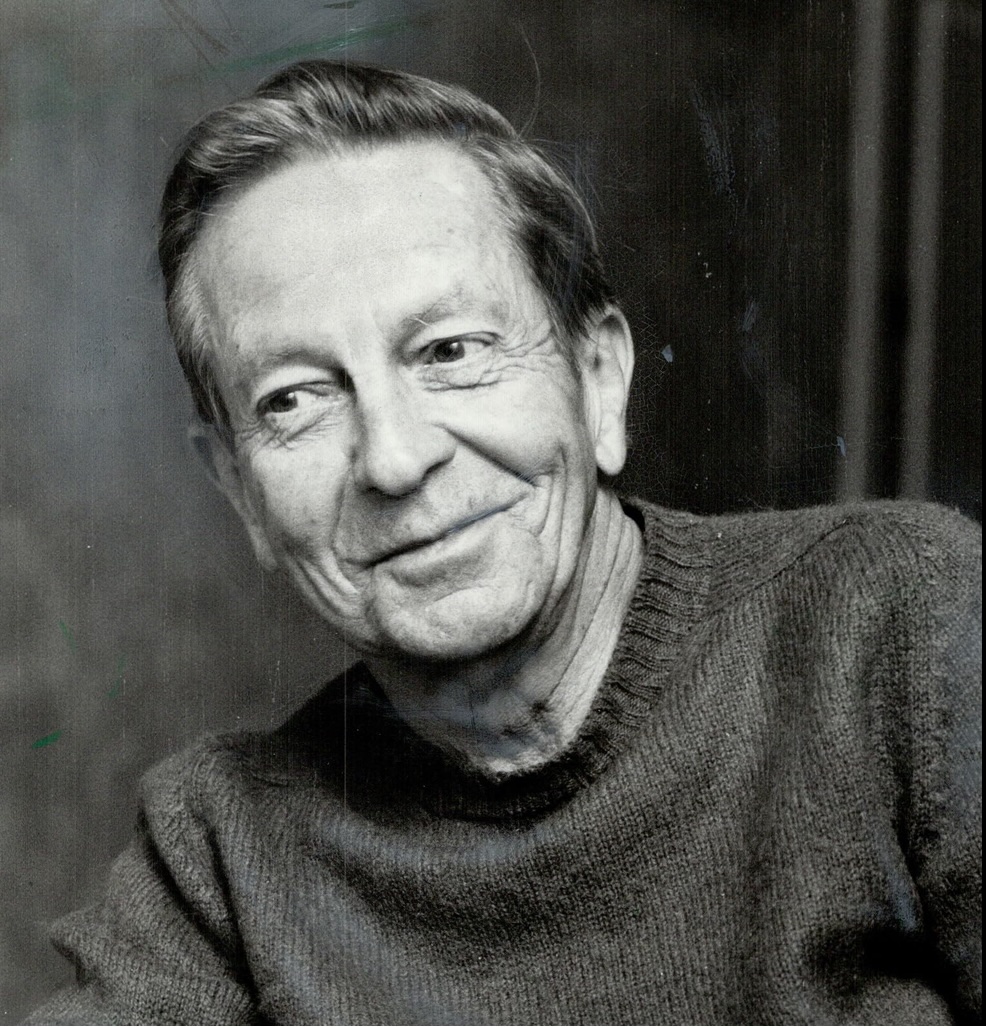
John William Cheever was born on May 27, 1912, in Quincy, Massachusetts. Cheever grew up in a once-comfortable middle-class family that unraveled during his adolescence. His father, a shoe salesman, faced financial ruin amid the decline of New England industries and turned to drink. His mother opened a gift shop to support the family, of which the young Cheever was ashamed. Expelled from Thayer Academy at 17, he transformed the experience into his first published story, “Expelled,” which appeared in The New Republic in 1930. This early piece foreshadowed themes of displacement and social anxiety that would recur throughout his work.
During the Great Depression, Cheever lived in Greenwich Village. He married Mary Winternitz in 1941; they had three children: Susan, Benjamin, and Federico. During World War II he served in the Signal Corps, writing training films rather than seeing combat. Later, the family moved to the suburbs of Westchester County, New York, territory that became his primary literary landscape. He famously wrote in a basement maid’s room in Manhattan before fully embracing suburban life in Ossining.
Cheever’s breakthrough came with stories like “The Enormous Radio,” in which a couple’s new radio broadcasts neighbors’ private conversations, exposing the fragility of their own domestic facade. This Kafkaesque tale marked a shift from his earlier, more naturalistic work toward surrealism and psychological depth. Other classics include “Goodbye, My Brother,” “The Country Husband,” “The Five-Forty-Eight,” and the iconic “The Swimmer.” In the latter, Neddy Merrill’s decision to swim home through backyard pools across a suburban county becomes a poignant journey through time, loss, and self-deception. A 1968 film adaptation starred Burt Lancaster.
His first collection, The Way Some People Live, received mixed reviews; Cheever later disowned it. Stronger volumes followed: The Enormous Radio and Other Stories, The Housebreaker of Shady Hill, and The Brigadier and the Golf Widow. In 1978, The Stories of John Cheever—a hefty compilation—became a bestseller, won the Pulitzer Prize for Fiction, and cemented his reputation. It remains a landmark of American short fiction.
Cheever’s novels were often hampered by the episodic nature of his short-story gifts, yet several achieved critical and popular success. The Wapshot Chronicle, a lively, satirical family saga drawing on his New England roots, won the National Book Award. Its sequel, The Wapshot Scandal, was more fragmented. Bullet Park received harsh reviews but has since gained admirers for its darker tone. Falconer, a prison novel inspired partly by teaching at Sing Sing, became a bestseller and marked a late-career resurgence. His final work, the novella Oh What a Paradise It Seems, offered an elegiac environmental fable.
Stylistically, Cheever excelled in clear, graceful prose that balanced comedy and pathos. He worked from “the interrupted event,” using anecdote and precise observation to illuminate larger truths. Themes centered on the duality of human nature—the gap between public decorum and private turmoil—and nostalgia for vanishing traditions of community against suburban rootlessness.
Cheever’s personal life was also turbulent. He battled severe alcoholism for decades, nearly dying from it in the 1970s before getting sober in 1975. Journals published posthumously in 1991 revealed his bisexuality, lifelong sexual guilt, depression, and self-loathing—elements that infused his portrayals of tormented masculinity and marital strain. His marriage to Mary endured strains but lasted until his death.
Cheever died of cancer on June 18, 1982, in Ossining. Posthumous publications revealed letters and journals that deepened public understanding of the man behind the Brooks Brothers facade. Blake Bailey’s 2009 biography Cheever: A Life further illuminated his complexities; even so, his work endures and continues to be anthologized and studied.
Michael F. Bishop, a writer and historian, is the former executive director of the International Churchill Society and the Abraham Lincoln Bicentennial Commission.