“Deep Throat”: Mark Felt
Special to the Newsletter
by Michael F. Bishop
Mark Felt was a legend at the Federal Bureau of Investigation who became one of the most important sources in the history of American journalism; he guided Bob Woodward and Carl Bernstein through the thickets of the Watergate scandal, and insisted on absolute anonymity, speaking only on “deep background.” Washington Post editor Howard Simons dubbed him “Deep Throat,” a playful nod to a notorious 1972 pornographic film and the journalistic term for sources providing information without attribution.
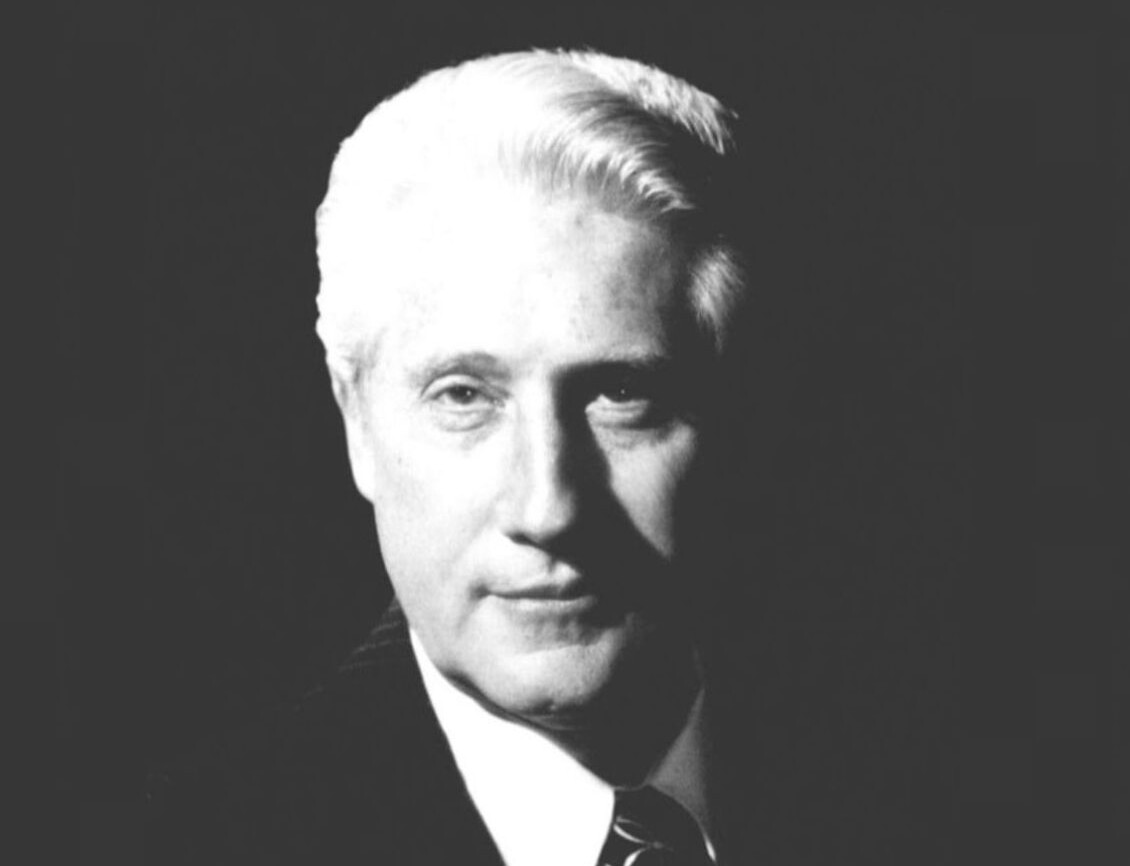
William Mark Felt was born on August 17, 1913, in Twin Falls, Idaho. The son of a carpenter and building contractor, Felt earned a degree from the University of Idaho, attended George Washington University Law School at night, and worked on Capitol Hill during the day. Admitted to the bar in 1938, he briefly practiced law before joining the FBI in 1942, shortly after the United States entered World War II.
Felt’s FBI career spanned more than three decades, marked by steady ascent through the ranks. He served in a variety of field offices across the country, including Seattle, New Orleans, and Kansas City, before moving to headquarters in Washington, D.C., where he headed the Inspection Division. A loyal protégé of longtime FBI Director J. Edgar Hoover, Felt embodied the bureau’s rigid, secretive culture. By 1971, he was effectively running day-to-day operations as associate director. Hoover’s death in May 1972 created a power vacuum and Felt expected to succeed him. However, President Richard Nixon appointed L. Patrick Gray, a loyalist with no law enforcement experience, as acting director. This snub deeply embittered Felt, who thought Gray was incompetent and politically compromised.
On June 17, 1972, The Watergate scandal blew up when five men linked to Nixon’s reelection campaign were arrested for breaking into the Democratic National Committee headquarters at the Watergate complex. As the FBI’s second-in-command, Felt oversaw the initial investigation, which quickly uncovered ties to the White House and the Committee to Re-Elect the President (CREEP). The administration pressured the bureau to limit the probe, fearing it would expose broader abuses of power, such as illegal wiretapping and political espionage.
Frustrated by these obstructions and believing the White House was undermining the FBI’s independence, Felt started to “advise” journalists in secret. He had known Washington Post reporter Bob Woodward from earlier encounters. In underground parking garage meetings in Rosslyn, Virginia, and late-night phone calls using elaborate signals (like moving a flowerpot on Woodward’s balcony), Felt provided crucial confirmations and leads. He told Woodward to “follow the money,” tracing illicit funds to the burglars, though this iconic phrase was dramatized in the 1976 film All the President’s Men; Felt never actually said it.
Felt’s “cues” helped Woodward and Carl Bernstein connect the break-in to high-level White House officials, such as former CIA operative E. Howard Hunt. Their reporting, bolstered by Felt’s insider knowledge, facilitated congressional investigations and Senate hearings in 1973, exposing a web of crimes that led to Nixon’s resignation on August 9, 1974.
Felt retired from the FBI in June 1973. For decades, Deep Throat’s identity remained one of journalism’s greatest mysteries, spawning endless speculation. Felt repeatedly denied being the source, even in his 1979 memoir The FBI Pyramid. In 2005, at age 91 and in declining health, he finally revealed himself through a Vanity Fair article penned by family lawyer John D. O’Connor. “I’m the guy they used to call Deep Throat,” Felt declared. Woodward, Bernstein, and former Post editor Ben Bradlee confirmed it. Felt’s family cited financial pressure as a factor, but also a desire to officially acknowledge his heroism.
Felt’s actions as Deep Throat earned him acclaim as a whistleblower who upheld the rule of law against executive overreach. Many hailed him as an American hero for helping expose corruption that compromised public trust. Yet his legacy is complicated by earlier controversies. In the 1950s and 1960s, Felt authorized illegal “black bag jobs” (warrantless break-ins and wiretaps) against Weather Underground radicals and their associates, part of the FBI’s COINTELPRO program targeting domestic dissidents. In 1980, Felt was convicted of violating civil rights for approving searches without warrants; he faced up to 10 years in prison but was fined, instead. Ironically, Nixon testified in his defense, arguing such tactics were necessary for national security. President Ronald Reagan pardoned Felt in 1981, praising his “high principle” in combating terrorism.
Critics argue that Felt’s leaks were motivated by a personal grudge over being passed over for director, not principle. Some, including Nixon aides, called him a traitor for undermining the presidency. Others note the irony: a man who bent laws in one era exposed lawbreaking in another. Felt’s story inspired the 2017 film Mark Felt: The Man Who Brought Down the White House, in which Liam Neeson portrayed him as a principled defender of institutional integrity.
Felt died on December 18, 2008, at age 95 from congestive heart failure in Santa Rosa, California. His dual legacy—as an enabler of FBI abuses, and a catalyst for presidential accountability—reflects the complexities of power in American democracy. He remains a symbol of the tensions between loyalty, duty, and conscience.
Michael F. Bishop, a writer and historian, is the former executive director of the International Churchill Society and the Abraham Lincoln Bicentennial Commission.